
Markets in a Midterm Election Year
Midterm elections in 2026 could reshape Washington and markets. All 435 House seats and one-third of the Senate are up for grabs, with Republicans holding razor-thin majorities in both. Historical trends suggest the President’s party often loses ground in a midterm election year.
For investors, midterm years have historically been volatile, with market pullbacks typically followed by strong rebounds post-election. History shows that the political party in power does not dictate overall stock market returns.
Stock Markets During Election Years
Federal Reserve Changes
Kevin Warsh has been nominated as the next Federal Reserve (Fed) Chair, with appointment contingent upon Senate Approval. The Fed Chair is a position appointed by the President and confirmed by the Senate for a 4-year term. The Fed Chair leads the Federal Open Market Committee (FOMC), an independent, non-partisan panel, which meets regularly to set the federal funds rate. The federal funds rate is the interest rate banks charge each other, which influences consumer loans and mortgage rates.
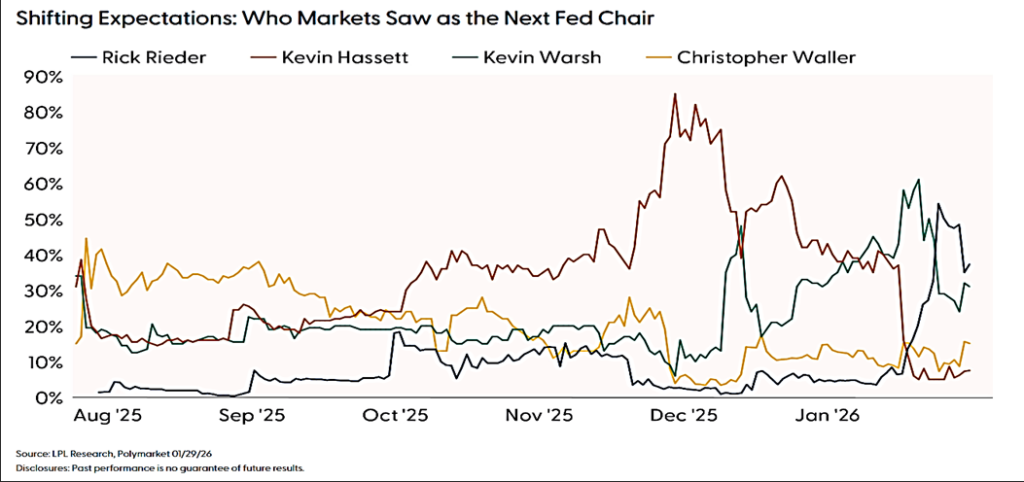
Why Does It Matter Who The Fed Chair Is?
The Federal Reserve has a dual mandate to achieve maximum employment and maintain stable price inflation. The Fed accomplishes this by adjusting interest rates and monetary policy based primarily on the balance between labor market strength and inflation trends.
There is potential for Warsh as a new Chairman to push for rate cuts when he takes over in May – A different approach from what we have seen with current Fed Chair Jerome Powell. A Federal Reserve rate cut would likely provide near-term support for financial markets by easing financial conditions and lowering borrowing costs. That being said, the markets reaction ultimately depends on the reason for the cut. Cuts driven by slowing growth or rising economic stress can signal underlying weakness, potentially increasing volatility within the market. The flip side to an interest rate cut is that if not properly timed, it may increase inflation.
Summaryedral reserve
New Fed Chairs are often tested by markets, and midterm election years tend to be more volatile. Don’t let any volatility that may come along shake your confidence. It will not shake ours. Markets have a habit of overreacting to the headlines, but we prefer to keep our eyes on the bigger picture. As always, please reach out with any concerns or questions – we are here to serve.